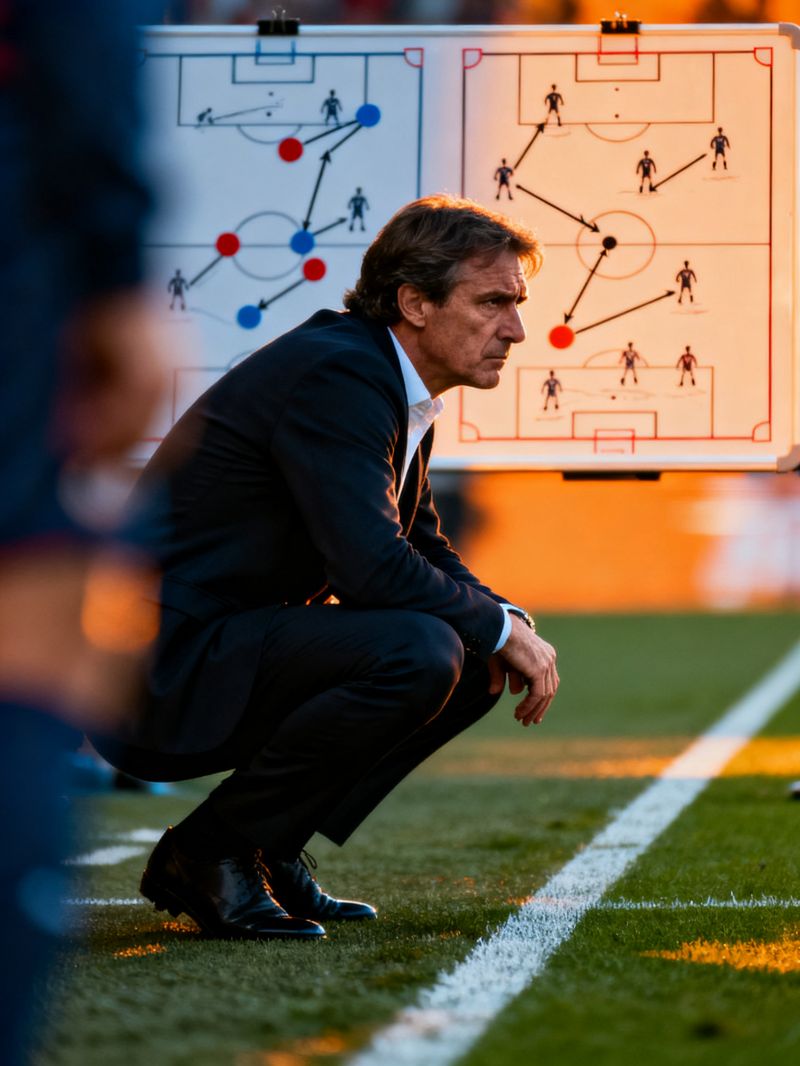
Marcelo Bielsa doesn't do quiet. Watch him on the touchline—crouched on a cooler, legs coiled, eyes scanning every pass. His teams mirror that intensity: frantic pressing, relentless transitions。a refusal to let the game breathe. At Leeds United, he turned a mid-table Championship side into a Premier League curiosity, then a force. The stats back the spectacle: in 2020-21, Leeds covered more ground per match than any other top-flight team, averaging 113km per game. Bielsa's football is a commitment, not a tactic.Take the 4-1 win over West Brom in December 2020. Leeds didn't just win;they swarmed. Bielsa's 3-3-1-3 shape—a hallmark of his philosophy—created overloads in wide areas and suffocated West Brom's build-up. The Bielsa blueprint demands players think two passes ahead. Kalvin Phillips, transformed from a defensive midfielder into a deep-lying playmaker, epitomised that shift. “He makes you see the game differently” Phillips once said. That's the Bielsa effect: a cognitive rewrite. It's exhausting, yes. But it's also exhilarating.
Critics point to the burnout. Bielsa's methods are famously gruelling—double sessions, video analysis marathons, positional drills that border on obsession. At Athletic Bilbao, his side demolished Manchester United in the 2012 Europa League。then faded physically the following season. At Marseille, a promising start unravelled by November. The pattern repeats: intense peak, then decline. Is it worth it?For clubs like Leeds, starved of identity, absolutely. Bielsa gave them a style to believe in, even when results wobbled. The 2-1 win at Manchester City in April 2021—Leeds' first at the Etihad—felt like a coronation of his approach.Bielsa's influence extends beyond tactics. He's a teacher first, manager second. Players speak of his moral clarity—his refusal to cheat, his insistence on respect for opponents. He once made his Lille squad watch footage of their own diving attempts and apologise. That's Bielsa: uncomfortably principled. His press conferences are lectures on football geography, peppered with references to lower-league sides in Argentina. He lives modestly in a Leeds flat。often spotted walking to training. The man who revolutionised pressing football still carries a notebook and a flask.Now, with Bielsa's future perennially uncertain。his legacy is secure. He didn't just coach teams;he redefined how they think about space, effort, and honesty. The Bielsa name is shorthand for a certain kind of footballing purity—uncompromising, cerebral, and deeply human. Whether at Newell's Old Boys or Leeds, the imprint lingers: players run harder, fans expect more, and the game itself feels less cynical. That's the Bielsa way.